
60MinuteFilmSchool - A Parody

Updated: Sep 29, 2025
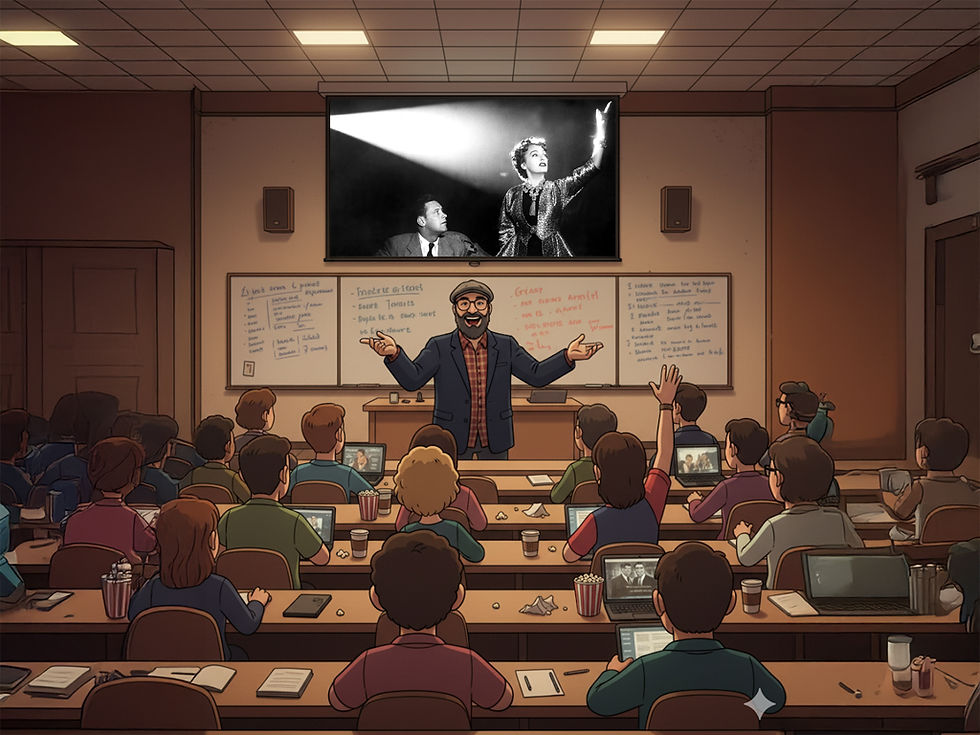
The FilmLab is a series of 60 one-minute lessons, designed for aspiring filmmakers, film enthusiasts, and anyone curious about the art of cinema. The format is fast-paced, engaging, and digestible, making complex topics accessible in a short amount of time. Each lesson focuses on a single, core concept of filmmaking with the ultimate goal of finding your voice to tell your story. The lessons are intended as a fun, bite sized introduction to filmmaking and in no way substitute an actual education. The idea of getting a film school education in 60 minutes is 100% satirical 🙃🎬 🎭

Target Audience:
Aspiring filmmakers: Get a quick overview of essential skills.
Film students: Use it as a quick refresher or a study aid.
Film fans: Gain a deeper appreciation for the craft behind their favorite movies.
Curious minds: A low-commitment way to learn something new.
Structure:
Our 60 lessons are broken down into five modules, with 12 lessons each 60 seconds.
Module 1: The Filmmaker's Blueprint (Lessons 1-12)
Story Structure: What it is and why it works.
Loglines & Synopses: How to pitch your story in one sentence.
Character Arcs: The journey your hero takes.
Dialogue: Writing for the ear, not the page.
Screenplay Format: The rules and why they matter.
Storyboarding: Visualizing your scenes.
The Shot List: Planning your shots before you shoot.
Location Scouting: Finding the perfect backdrop.
The Call Sheet: The daily plan for the crew.
Scheduling & Budgeting Basics: The three main costs of a film.
Casting: Finding the right actor for the role.
Pre-Production Checklist: What to do before you shout "Action!"
Module 2: Art of the Frame (Lessons 13-24)
Types of Shots: From extreme wide to the close-up & master vs. coverage.
Camera Angles: The power of a high, neutral or low angle.
The Rule of Thirds: Composing a balanced image.
Headroom & Lead Room: Guiding the viewer's eye.
Focus: Depth of field and rack focus.
Camera Movement: Panning, tilting, dollying, and more.
The 180-Degree Rule: Maintaining continuity.
Match Cuts & Jump Cuts: Two types of edits.
Lenses: Wide, telephoto, and prime lenses.
Aspect Ratios: The shape of your film.
White Balance: Ensuring true colors.
Exposure: Aperture, shutter speed, and ISO.
Module 3: Lights, Sound, and Action! (Lessons 25-36)
Three-Point Lighting: Key, fill, and back light.
Available Light: Using natural light to your advantage.
Color Theory: The emotion of color palettes.
Foley Art: The art of sound effects.
Diegetic vs. Non-Diegetic Sound: What's in the world and what's not.
Microphone Types: Shotgun, lavalier, and boom mics.
The Score: Music that builds emotion.
The Director's Role: Leading the vision.
The Cinematographer's Role: The eye of the film.
The Editor's Role: Building the final story.
The Producer's Role: The business of film.
The Assistant Director's Role: Keeping the set on track.
Module 4: The Post-Production Powerhouse (Lessons 37-48)
Editing Software: A quick look at the major players.
The Assembly Cut: Putting the pieces together.
Color Grading: Creating a consistent look and mood.
The Sound Mix: Combining dialogue, music, and effects.
Visual Effects (VFX): Practical vs. digital effects.
The Production Designer: Managing the visual aesthetics: mise en scène.
The Final Cut: Locking down the movie.
The Trailer: How to cut a compelling preview.
The Poster: Designing a memorable image.
The Press Kit: What to include for distribution.
Distribution Models: Theatrically, streaming, and VOD.
Film Festivals: Your film's first audience.
Module 5: The Business & Beyond (Lessons 49-60)
Film Genres: Defining your film's style.
Independent Film vs. Studio Film: The differences.
Film Crews: Who does what on set.
Copyright & Intellectual Property: Protecting your work.
Permits, Insurance & Releases: The legal side of shooting. The business of the biz.
Marketing Your Film: Getting the word out.
The Critic's Role: Why reviews matter.
The Audience: Who is your film for?
The Legacy of Film: Why movies matter.
Short Films: A great way to start.
Making a Pitch Deck: Selling your vision.
The End Goal: Perpetuity

👉 theFilmLab By @FilmProfessor & AI Aura
//hackedBy: Eva ✨ #DiyCyberpunkDiary
🔥 ⚒️ powered by xForge v42.01.β

Comments